Source Battery Capacity Tester for Lithium-Ion, Lead-Acid, and Storage Batteries
Find 30 battery capacity tester units suitable for Lithium-Ion, lead-acid, and storage battery applications. Buyers can compare models like BT-168 and SKXD with varying voltage ranges and customization options from Chinese manufacturers.
Key considerations
Products List








Comprehensive Sourcing Guide
Battery Capacity Tester Sourcing Guide
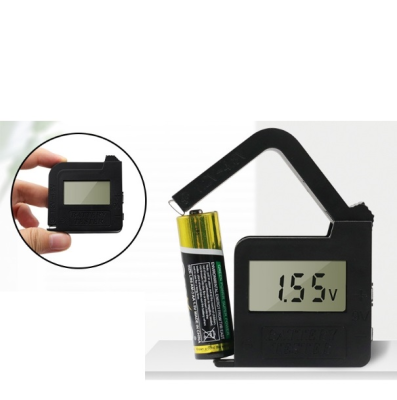
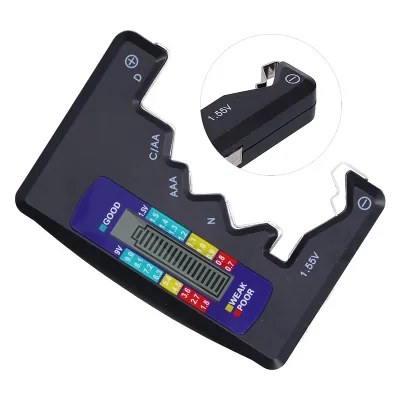
The global market for battery capacity testers has evolved to support a diverse range of electrochemical technologies, from consumer-grade lithium-ion cells to industrial lead-acid storage systems. Procurement professionals must recognize that these devices are not monolithic; they range from handheld single-item units designed for quick voltage checks to large-scale automated stations capable of complex charge and discharge cycles. The observed product landscape includes specialized models like the BT-168 and BT-168D, which serve as finished battery testers for specific cell applications, alongside more robust systems such as the SUNKALEAD-CT-512-08 and the SKXD series designed for broader storage battery testing.
Buyers entering this market must first distinguish between devices intended for simple capacity verification and those engineered for full-cycle performance analysis. The data indicates a clear split between portable tools, often packaged in blister cards for single-item sales, and industrial-grade equipment that requires wooden box packing and foam protection for safe transport. Understanding this distinction is critical, as the operational environment dictates the necessary features, such as the presence of a 5-inch touch screen for data logging or the requirement for a 15kVA power supply in three-phase voltage regulator configurations.
Product Scope and Observed Listing Signals
When evaluating product listings, buyers should look for specific signals that define the tester's intended application and physical form factor. The market currently features devices explicitly labeled for Lithium-Ion Battery applications, as well as those supporting Lead-acid Battery testing, indicating that a single procurement strategy may not suffice for a facility handling multiple battery chemistries. Some listings highlight "Multi-Function Battery Capacity Tester" capabilities, suggesting a device that can handle various cell types, while others are strictly defined as "Battery Volt Tester" or "Storage Battery Tester," limiting their utility to specific diagnostic tasks.
Physical attributes and packaging details serve as reliable indicators of the product's intended scale and durability. Observed listings show a variance in packaging from simple blister cards for compact, single-item units to heavy-duty wooden boxes with foam interiors for larger, more sensitive equipment. This difference in packaging often correlates with the device's complexity and the need for protection during international shipping. Buyers must verify whether the product is offered as a "Single item" or in bulk sets, as the Minimum Order Quantity (MOQ) can range significantly from 1 set to 1000 units depending on the customization level and the specific model number, such as the Hdgc3915 or SKXD.
Technical Specifications to Verify
Technical due diligence requires a rigorous verification of the measurement capabilities and environmental operating limits of the proposed equipment. Buyers must confirm the specific voltage ranges supported by the device, as observed listings mention measurement ranges such as 0-16V for certain handheld units, while others are designed for "Other Measuring Voltage" applications. It is essential to validate whether the tester supports the specific voltage and current requirements of the battery cells being tested, ensuring that the input resistance and charge/discharge parameters align with the facility's operational standards.
The interface and data handling capabilities are equally critical for modern procurement needs. Advanced models in the current market feature 5-inch touch screens and memory storage capacities capable of holding up to 3000 cells, which facilitates efficient data management and reporting. However, buyers must also verify the power supply requirements, as some units operate on AC220V±15% with a 15kVA power of three-phase voltage regulator, while others may rely on internal Li-ion batteries. Environmental tolerance is another key specification, with some industrial units rated for operating temperatures between -20°C and +55°C, a range that must be compatible with the intended storage or testing facility.
Compliance and Safety Documentation
Safety and regulatory compliance are paramount when sourcing electrical testing equipment, particularly for devices that interact directly with high-energy storage systems. While specific certification statuses like CE are noted in background data, buyers must not assume compliance without explicit documentation from the supplier. The procurement process should mandate the submission of safety data sheets, electrical safety test reports, and any relevant regional certification documents that verify the device meets the safety standards of the destination market.
Documentation regarding the manufacturing origin and standard compliance is also essential for risk mitigation. Most observed products originate from China, with specific manufacturing hubs in Guangdong, yet the "Made in China" label alone does not guarantee adherence to international safety protocols. Buyers should request proof of adherence to specific product standards, such as the dimensional standard of 113x64x30mm for compact units or the larger 1.2m1.2m1.8m footprint for industrial stations. Verifying that the product completion type matches the intended use, such as distinguishing between a "Battery Capacity Checker" and a "Battery Volt Tester," ensures that the device is legally and safely deployed for its specific application.
Cost Drivers and Commercial Terms
The commercial landscape for battery capacity testers is influenced heavily by the level of customization and the complexity of the hardware. Listings indicate that some models are available as "Non-Customized" finished goods, while others offer "Customized" options, which can significantly impact the final price and lead time. The observed price range is vast, spanning from $0.66 for basic components to $29,000 for high-end industrial systems, reflecting the difference between simple voltage testers and complex automated charge/discharge stations.
Commercial terms must be scrutinized to understand the total cost of ownership, including packaging and shipping logistics. The choice between blister card packaging and wooden box packing can affect shipping costs and insurance requirements, particularly for heavy industrial units. Buyers should also clarify the selling units, as some suppliers offer single items while others require bulk purchases. The MOQ of 1 set for certain models offers flexibility for small-scale testing, whereas larger orders may be subject to different pricing tiers or customization fees, especially for models with adjustable rated currents like 30A, 50A, 80A, or 100A.
Supplier Qualification and Quality Control
Supplier qualification in this sector requires a focus on manufacturing consistency and the ability to provide detailed product specifications. Buyers should verify the brand name and manufacturing date code, as observed listings show products with codes like "24+" and brand names such as "Original brand," which may indicate the age of the inventory or the authenticity of the manufacturer. It is crucial to confirm that the supplier can provide a clear chain of custody for the equipment, ensuring that the "Made in China" origin is accurately documented and that the product has not been subject to unauthorized modifications.
Quality control processes should be validated through the supplier's ability to provide detailed product attributes and performance data. The presence of specific attributes like "Input Resistance: 0" or "Charge/Discharge: Voltage 0" in listings suggests that buyers must request actual test results to confirm these values are not placeholders. Suppliers should be able to demonstrate their quality assurance protocols, including how they handle the "More details" requests and ensure that the product completion type matches the advertised specifications. Establishing a clear communication channel for technical support is also vital, as many listings direct buyers to contact the supplier for further information.
Long-Term Procurement Checks
Sourcing battery capacity testers is not a one-time transaction but an ongoing relationship that requires regular performance monitoring and maintenance planning. Buyers should establish a protocol for periodic calibration checks, especially for devices used in critical applications like Lithium-Ion Battery capacity testing or Lead-acid Battery storage testing. The longevity of the equipment depends on the quality of the initial build and the availability of spare parts, which can be verified by checking the manufacturer's support for the specific model number, such as the BT-168 or SUNKALEAD-CT-512-08.
Future-proofing the procurement strategy involves assessing the scalability of the testing equipment as battery technologies evolve. As the market shifts towards higher energy density cells, the testing equipment must be capable of adapting to new voltage and current requirements. Buyers should evaluate whether the current supplier offers firmware updates or hardware upgrades to extend the life of the device. Additionally, maintaining a record of the manufacturing date code and the specific test region capabilities ensures that the equipment remains compliant with evolving industry standards and continues to meet the facility's operational needs over the long term.
FAQs
What models are available for battery capacity testers?
Available models include BT-168, BT-168D, SUNKALEAD-CT-512-08, SKXD, and Hdgc3915. These devices support lithium-ion and lead-acid batteries. Some units feature a 5-inch touch screen and memory storage for 3000 cells. The BT-168 is packaged in a blister card, while others use wooden boxes. Buyers should contact suppliers for specific model details and compatibility.
Can these testers be customized for specific needs?
Yes, customization is available for certain battery capacity testers. Some models allow for customized rated currents such as 30A, 50A, 80A, or 100A. Other units are listed as non-customized finished products. Buyers requiring specific voltage ranges or packaging should verify options directly with manufacturers. Customization may affect lead times and pricing structures.
What is the typical MOQ for battery capacity testers?
The minimum order quantity typically starts at 1 set for individual units. Some listings indicate an MOQ range of 1 to 1000 units depending on the supplier. Buyers can often order single items for testing purposes. Bulk orders may offer different pricing tiers. It is advisable to confirm the exact MOQ with the specific vendor before placing an order.
Where are these battery testers manufactured?
These battery capacity testers are manufactured in China, specifically in the Guangdong region. The products are labeled as made in China. Buyers should verify the exact origin and shipping details with the supplier. Manufacturing location can impact logistics and lead times. Ensure the supplier provides clear origin documentation for customs and compliance purposes.
What specifications do these testers support?
Specifications vary by model, with some supporting a measurement voltage of 0-16V. The BT-168 has a standard size of 113x64x30mm. Other models may require AC220V power supply and operate within -20°C to +55°C. Some units feature a 15kVA power regulator. Buyers must check the specific model datasheet for accurate technical parameters and operational requirements.
How are these testers packaged for shipping?
Packaging options include blister cards, wooden boxes, and wooden packing with foam inside. The BT-168 uses a blister card, while larger units like SUNKALEAD-CT-512-08 use wooden boxes. Some packages measure 1.2m*1.2m*1.8m. Proper packaging ensures protection during transit. Buyers should request packaging details to estimate shipping costs and handling requirements.